.jpg?height=200&name=stw%C3%B3rz%20obraz%20przedstawiaj%C4%85cy%20dziewczyn%C4%99%20robi%C4%85c%C4%85%20skr%C4%99ty%20w%20jodze.%20u%C5%BCyj%20kolor%C3%B3w%20bia%C5%82o-czarny-fioletowy%2c%20styl%20komiksowy.%20(1).jpg)
Twists in yoga: a natural way to support spinal health and improve digestion Why are twists so...
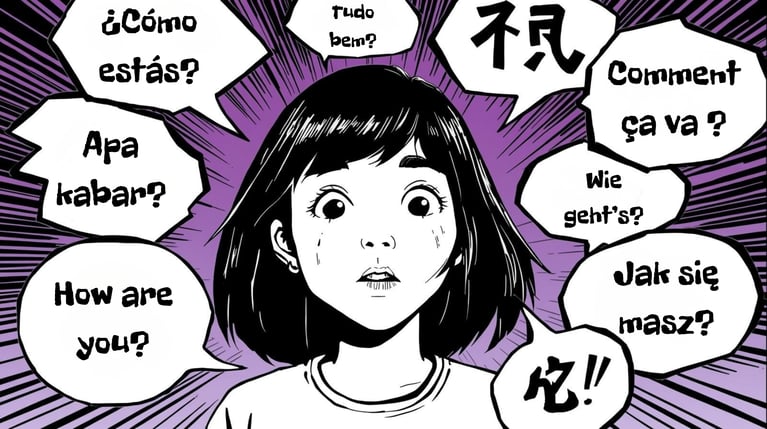
Bilingualism in Practice – How to Support Your Child in Learning Polish?
On October 25th, I took part in the 2nd Educational Conference EDUKATIVA’25, organized by the Polish–Swiss Institute of Culture and Education.
The event brought together teachers, educators, principals of Polish community schools, organization representatives, parents, and all enthusiasts of the Polish language and culture.
The workshops I attended were especially valuable:
📘 Dr. hab. Prof. UKEN Marzena Tytuła-Błasiak (Institute of Polish Philology UKEN, Department of Literature and Polish Language Didactics) led a session titled:
“Supporting a Child in Learning Polish as a Heritage Language – Practical Guidelines for Parents.”
The Professor explained the challenges of bilingualism and the difficulties children face in multilingual environments in an exceptionally clear and accessible way. Although the topic is very broad, we left with many practical insights — and I’m happy to share them below.
Most Interesting Takeaways and Reflections from the Workshop
The information below comes from Professor Tytuła-Błasiak’s session — a set of practical guidance for parents and educators supporting children in learning a heritage language.
How to Support Your Child’s Language Development?
-
A child should develop one dominant language well to understand grammar structures and build confidence.
-
Reading and audiobooks strengthen language skills and imagination.
-
Everyday open-ended questions show interest and strengthen connection:
How did you sleep? What did you dream about? What would you like for breakfast? How was your day? -
When learning to speak, it is important for the child to see the movement of the speaker’s lips — language learning uses both hearing and sight (“motor theory of speech”).
-
The more we talk to the child, the richer their vocabulary and cognitive development.
-
If the child mixes languages, respond in one language without correcting — keep communication flowing.
-
Avoid constant corrections so the child doesn’t lose confidence.
-
One language will always become dominant — this is natural in multilingual environments.
-
Not every study or method works the same for every child — each child learns at their own rhythm.
Games That Develop Language and Thinking
-
Sorting (laundry, groceries, fruits, vegetables) helps children recognize patterns and categories such as colors, shapes, or functions.
-
Talking about the day, creating stories, and explaining cause-and-effect relationships develop logical and linguistic skills.
-
Using idioms and metaphors is the highest level of language mastery — it shows the child understands non-literal meaning.
-
Teach common word forms first (e.g., washed, you wash) instead of rare grammatical cases.
-
If the child uses an incorrect form (e.g., zupa instead of zupę), repeat it correctly in a natural question:
– Oh, you ate the soup?
– Was the soup good?
This helps the child notice the correct form on their own. -
Surrounding the child with the language helps immensely — books, music, films, conversations, word games.
-
A positive atmosphere and lack of pressure are essential — children learn best when they feel safe and accepted.
-
Schools often begin with colors, yet in daily life we rarely use them — it’s better to focus on vocabulary that is genuinely useful.
-
Repetition strengthens learning — the brain builds stable neural connections that allow faster language reactions.
Fun Facts About the Brain and Language Learning
-
When children learn new languages, they layer them on top of each other, searching for similarities.
-
Our brains automatically simplify and compare structures — for example, assigning English th to the Polish t.
-
Language learning is a biological process — neurons create microscopic “bubbles” of information that disappear if we don’t review the material.
-
Regular language use stabilizes them and creates new synaptic connections.
💛 Summary
Taking part in EDUKATIVA’25 was incredibly inspiring.
Professor Marzena Tytuła-Błasiak’s workshop reminded us that bilingualism is not a barrier but a gift that enriches a child both cognitively and emotionally.
Patience, consistency, and everyday conversation are key — they shape language as much as they shape our relationship with the child.
Because language is not just words — it is closeness, connection, and understanding. 💛✨
.png?width=767&height=430&name=Projekt%20bez%20nazwy%20(1).png)

